the Zealous


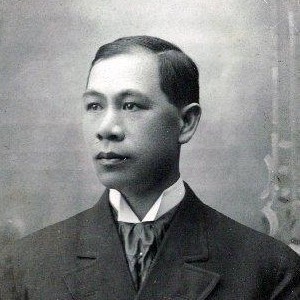
Born in 1860 in Xiangshan, Guandgong Province, China, Hong Yen Chang eventually made his way to America to study as part of the national China Educational Mission. He was 13 years old. His father had passed away three years earlier.
 
For the next nine years, he lived and studied in the US, residing with different families in various states. While at Yale College, the Chinese government abruptly terminated Hong Yen Chang's educational mission, and he was recalled back to China.
 
This was a temporary setback for Hong Yen Chang. A mere two years later, he found his way back to America. He later graduated with honors from Columbia Law School. In 1888, Hong Yen Chang was admitted to the Bar of New York. He became the first Chinese immigrant licensed to practice law in the US.


In Bullshit Jobs: A Theory, David Graebe, anthropologist and an early founder of the Occupy Wall Street movement, recounts the rise in the last century of “bullshit jobs”: occupations that serve no socially useful function, and instead cause soul-crushing psychological suffering to those forced to take on such work. Graebe contends that as much as forty percent of all jobs in the world are bullshit, which he defines as:

a form of paid employment that is so completely pointless, unnecessary, or pernicious that even the employee cannot justify its existence even though, as part of the conditions of employment, the employee feels obliged to pretend that this is not the case.

Graeber catalogs five different species of bullshit jobs: flunkies, goons, duct tapers, box tickers, and taskmasters. He indicts all “corporate lawyers” as falling into the “goons” category.


In the US, lawyers are ethically prohibited from contacting a party the lawyer knows is represented (or whose employer is represented) by counsel regarding a matter that is the subject of that representation—unless such counsel consents. In the transactional context, compliance with the rule can be, at best, socially awkward and, at worst, an ethical trap for the unwary.

There’s an enlightening Redline collaboration underway about the practical application of this rule, in which questions like the following are pondered:

In the absence of knowledge that the other side is represented, should counsel insist on not attending phone conferences unless she can confirm that the other side’s lawyer is present or consents?

If a company is “big enough”, shouldn’t counsel assume representation, despite the actual knowledge requirement?

May counsel rely on the assurances of the other side’s non-legal staff that the other side’s lawyer consents to meeting attendance?

As presence is not equal to consent, may counsel direct an email to a represented person so long as the other side’s lawyer is copied?

What about "ghost writing" emails for a client?

The no-contact rule is not without its detractors. Professor Leubsdorf questions why the consent of the represented party is insufficient to waive operation of the rule. The rule anoints the lawyer as the absolute arbiter of whether the client may contact the other side's lawyer, setting up an inherent conflict of interest:

If the lawyer is paid by the hour, he will profit if all communications go through him. In addition, direct communication with opposing counsel may reveal to a client that his lawyer is lazy or uninformed, or that the client’s prospects of success differ from what his lawyer has led him to believe. These possibilities may well bias the lawyer against consenting to direct communications with his client.

All in all, I do not believe that it is justifiable to empower lawyers to decide whether their clients will be able to talk with other lawyers. The rule so providing is not rooted in antiquity, serves no compelling interest, and was probably influenced by an improper desire to protect lawyers against their own clients. Granting the possible dangers of uncounseled communications, it by no means follows that the lawyer is best suited to decide whether a client should risk them, particularly when the client can obtain the lawyer's advice before deciding. In its present form, [the no-contact rule] gives lawyers unnecessary power over their clients' decisions and may lead to conscious or unconscious subordination of the interests of the clients.

John Leubsdorf, Communicating with Another Lawyer’s Client: The Lawyer’s Veto and the Client’s Interests (U. Penn L. Rev. 1979).
 
Geoffrey C. Hazard, Jr. and Dana Remus Irwin, in Toward a Revised 4.2 No-Contact Rule (Hastings L.J. 2009), have similarly noted the paternalism exhibited by the rule and how it can work against the client’s interests. “By placing complete control of communications in the lawyer’s hands, this approach presumes the role of the traditional, faithful lawyer. But fulfillment of this role is contradicted by the very initiative the client is undertaking—contacting another lawyer after deciding a retained lawyer is not serving the client’s best interests.”

The authors propose reforms to the rule only after first making the case for the rule’s repeal in its entirety, and the case they make is not without merit. "There is a strong argument that the Rule should be repealed and its work done by Rule 4.3—that is, a lawyer should not present himself to a non-client as disinterested, should not give legal advice (except to consult another lawyer), and should not negotiate with a person he knows to be represented."

We’re paid to be prophets.

When we study law we are not studying a mystery but a well-known profession. … The reason why it is a profession, why people will pay lawyers …, is that in societies like ours the command of the public force is entrusted to the judges …, and the whole power of the state will be put forth, if necessary, to carry out their judgments and decrees. People want to know under what circumstances and how far they will run the risk of coming against what is so much stronger than themselves, and hence it becomes a business to find out when this danger is to be feared. The object of our study, then, is prediction, the prediction of the incidence of the public force through the instrumentality of the courts.

Oliver Wendell Holmes, Jr., The Path of the Law, 10 Harvard L. Rev. 457 (1897) (emphasis added).

Contract drafting is an exercise in prediction. We are writing for an intended outcome, based on predictions we make about how a fact-finder, judge or arbitrator will process and construe the language we've written. It is no less true in this endeavor than in any other: collaborating with trusted peers, and opening ourselves up to meaningful challenge, is the best way to refine our craft and improve the accuracy of our predictions.


Knocking down a false, weak or misleading characterization of your opponent's argument is to engage in strawmanning. This kind of argumentation fallacy requires that the audience be ignorant or uninformed of the original argument to be successful.


In a study published in the Journal of Corporation Law, law school Professors Badawi and Webber examined, over a five-year period, takeover target share price changes in reaction to the perceived quality of the law firm(s) filing litigation challenging, on behalf of institutional shareholders, the fairness of the announced proposed merger or acquisition. The professors grouped the plaintiff firms into "high quality" and "low quality", based on a number of critieria, including value of settlements recovered and whether any of the firms were openly criticized by the Delaware Chancery judges as being, well, worthless leeches, basically.

A federal district court decision in Massachusetts (summarized ably here) is a grim reminder to all of us that even the most trivial article in the English language can make or break your client's contract or case.

In late April, Disney, owner of the Star Wars franchise, announced via Twitter that we should all celebrate May 4th as “Star Wars Day” by tweeting our favorite Star Wars memories using #maythe4th--with tweets powered by Disney Legal:

Celebrate the Saga! Reply with your favorite #StarWars memory and you may see it somewhere special on #MayThe4th.

By sharing your message with us using #MayThe4th, you agree to our use of the message and your account name in all media and our terms of use here: http://disneytermsofuse.com.


Few will have the greatness to bend history itself, but each of us can work to change a small portion of events. … It is from numberless diverse acts of courage and belief that human history is shaped. ...

It's good to be reminded of how fortunate we are to be practicing law in a society that upholds the rule of law.


From the Supreme Court of Colorado

To all Colorado attorneys: In these exceptional times, it seemed appropriate to bring you up to speed on some of the steps our court has taken in response to the challenges inherent in the COVID-19 pandemic.


From Judge Alsup's Order re Motion to Compel Arbitration, Abernathy v. Door Dash (ND Cal. Feb. 10. 2020):

For decades, the employer-side bar and their employer clients have forced arbitration clauses upon workers, thus taking away their right to go to court, and forced class-action waivers upon them too, thus taking away their ability to join collectively to vindicate common rights. The employer-side bar has succeeded in the United States Supreme Court to sustain such provisions. The irony, in this case, is that the workers wish to enforce the very provisions forced on them by seeking, even if by the thousands, individual arbitrations, the remnant of procedural rights left to them. The employer here, DoorDash, faced with having to actually honor its side of the bargain, now blanches at the cost of the filing fees it agreed to pay in the arbitration clause. No doubt, DoorDash never expected that so many would actually seek arbitration. Instead, in irony upon irony, DoorDash now wishes to resort to a class-wide lawsuit, the very device it denied to the workers, to avoid its duty to arbitrate. This hypocrisy will not be blessed, at least by this order.

This case is addressed in the Redline query, Pro-provider arbitration clause for B2C online terms of service in the US.

One common negotiating mentality among lawyers is “go hard or go home”, but according to a Wharton professor of operations and an Uber data scientist (Knowledge@Wharton Blog, Hard Negotiations: Why a Softer Approach Yields Better Outcomes), harmonious bargaining, ie, approaching negotiations as a joint problem to be solved – or even, foregoing any negotiation – can yield better long-term results.

In a lot of these cases, the negotiation is only the beginning of our relationship or interaction. We’re meeting people and having to interact with them again and again after the negotiation process. It’s not that when we leave the table everyone forgets what has happened. We remember the price we reached or some agreement we reached, but we also remember how we reached that outcome, and we form perceptions of our counterparts. These relationships can have long-term implications beyond the negotiation table.
….
When we think about negotiation strategies, we tend to think, “Oh, we’re going to negotiate anyway. Let’s see how we navigate that situation.” But in many cases we might be better off not even starting this process — not engaging in negotiation that may end up creating conflict.


Benjamin N. Cardozo was a lawyer with serious mojo. He began his law career in 1891, having passed the New York bar exam despite an uncompleted term at Colombia Law. He co-founded the firm of Simpson, Warren & Cardozo, and practiced there for 23 years.
 
He eventually would serve as a judge at the New York Court of Appeals (New York’s highest court) for 18 years, before service as an Associate Justice of the US Supreme Court from 1932 to 1938. He was appointed by President Hoover to replace the iconic Oliver Wendell Holmes
 
During a time of rapid industrialization, Cardozo is known for his rulings in contract and tort law. As a Supreme Court Justice, Cardozo was a member of the so-called “Three Musketeers”, along with Louis Brandeis and Harlan Stone, in issuing opinions generally supportive of the New Deal agenda of Franklin D. Roosevelt during the Great Depression.