the Zealous


Genius crowdsources song lyrics by soliciting individual contributors to post their interpretations of the words they hear in songs. Google rather blatantly copied Genius’ crowdsourced lyrics for display at the top of Google search results, as proven by Google’s replication of Genius-coded digital watermarks. Genius alleges violation of the Genius Terms of Service which plainly forbid that which Google did. Genuis claims a massive drop in ad revenue caused by a plummeting of the numbers of users visiting the Genius sites as a result of Google’s actions.

Genius brought breach of contract and unfair competition claims against Google in New York state court. Google sought removal to federal court, claiming that Genius’ claims are redressable only via copyright, and only US district courts have jurisdiction for copyright claims. The US District Court for the Eastern District of New York granted the motion to remove the case from state court, refused remand, and promptly dismissed the claims with prejudice, on grounds of copyright preemption.

The Second Circuit Court of Appeals, in an unpublished opinion (ML Genius Holdings LLC v Google LLC, 2022), affirmed the ruling, and in the process called into question the enforceability of any contract governing the supply or exchange of data or information.


Infuriating excerpt from What it Takes to Be a Trial Lawyer if You are not a Man by Lara Bazelon, The Atlantic, September 2018:

Last year, Elizabeth Faiella took a case representing a man who alleged that a doctor had perforated his esophagus during a routine medical procedure. Before the trial began, she and the defense attorney, David O. Doyle Jr., were summoned to a courtroom in Brevard County, Florida, for a hearing. Doyle had filed a motion seeking to “preclude emotional displays” during the trial—not by the patient, but by Faiella.

“Counsel for the Plaintiff, Elizabeth Faiella, has a proclivity for displays of anguish in the presence of the jury, including crying,” Doyle wrote in his motion. Faiella’s predicted flood of tears, he continued, could be nothing more than “a shrewdly calculated attempt to elicit a sympathetic response.”


r/Lawyertalk 28.08.23 post by reddituser jtuffs:

I am shocked by how awful so many lawyers are

Does anyone else feel this way? I see the work product of so many of my adversaries - usually solo practitioners who I am assuming were solo from day one and never had to please an experienced partner and never had a real mentor - and it literally astounds me. Sometimes it seems like they have no idea what the law is on the area we are briefing or arguing about. Sometimes they submit papers filled with typos, or with different font sizes in different paragraphs, or with half of it double spaced and half single.


In the realm of food safety advocacy, few names hold as much weight as Bill Marler. With a formidable track record of holding food producers accountable and championing reform, Marler has solidified his position as a driving force in the fight against foodborne illnesses, working to ensure the health and safety of our food supply, in the US and around the world.

Marler's transformation to food safety champion began in the early 1990s, when he represented victims of the infamous Jack in the Box hamburger E. coli outbreak.  Poisoned: The True Story of the Deadly E. coli Outbreak that Changed the Way Americans Eat, by best-selling author Jeff Benedict, chronicles the Jack in the Box outbreak and the rise of Bill Marler as a food safety attorney. The book is now the basis of a Netflix documentary of the same name.


MongoDB is a popular documents-oriented database, the source code of which is licensed under an open source license, the Server Side Public License (SSPL).1

The SSPL is based on the Affero General Public License v3 (AGPL). Until 2018, the AGPL applied to MongoDB source code. AGPL was replaced with the SSPL in response to cloud hosting providers like Amazon making use of a MongoDB clone as a service. The only meaningful difference between the AGPL and the SSPL is the copyleft provision.

AGPL has a copyleft provision that requires the source code of modified versions of the licensed program be made available to all users who interact with the software over a network. That is, if you modify the program and use it in your cloud-bases application or service, you must make those modifications and the program itself available in source code form.

Mongo replaced this copyleft provision with a new version—copyleft on steroids.

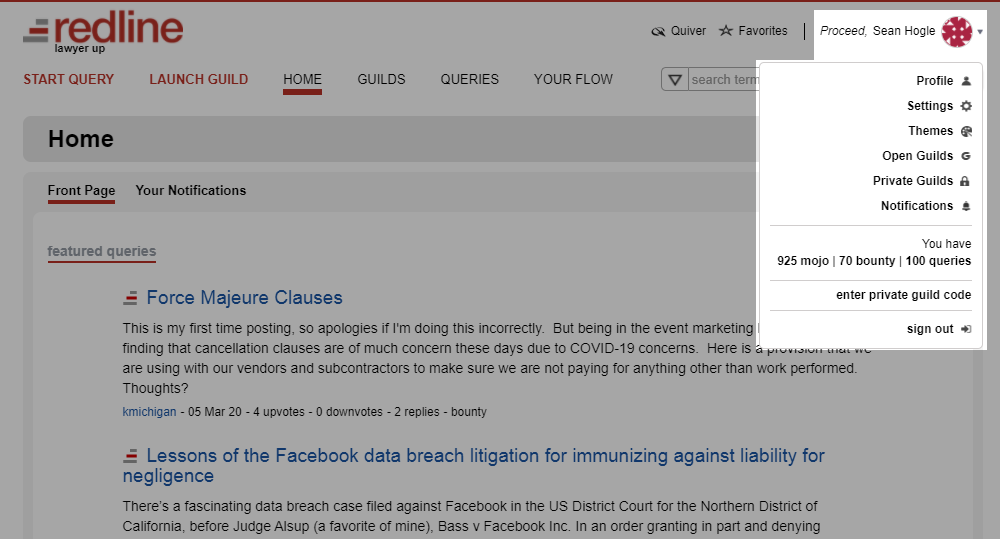
Errors and Omissions, est. 2017, is a query dedicated to anonymous descriptions of fuck-ups or near fuck-ups, as well as valuable advice.

Some excerpts:


In high stakes transactions in which vast sums of wealth are exchanged in return for ownership in ongoing complex businesses, mergers and acquisitions (M&A) contracts are an oft-overlooked source of clever legal craftsmanship. With so much value and risk embodied in these transactions, much compelling contract language that's produced in these deals is readily amenable for use in non-M&A contexts.

Glenn D. West, a prominent M&A lawyer and commentator whose insights reach well beyond the M&A context, has written extensively about the appropriate contract language to use in order to effectively disclaim the threat of fraud claims and avoid liability for extra-contractual statements. In two highly regarded pieces for the ABA Business Lawyer (regarding measures to avoid extra-contractual liability and fraud liability carveouts), Mr. West has proven an effective advocate for, inter alia, the following propositions:


George Remus emigrated from Germany to America with his family in 1882. By the age of 19, he became a certified pharmacist in Chicago, and by the age of 21, he had purchased his first pharmacy. At 24, after his purchase of yet another drugstore, George decided to quit the pharmacy business and instead pursue a career in law.

He attended what is now the DePaul University College of Law at night (in half the usual time) and was admitted to the Illinois Bar in 1904. He became an accomplished criminal defense lawyer. He pioneered the progenitor to the temporary insanity defense in a notorious murder case in 1914. By 1920, George was earning close to $500,000 a year, or nearly $7.5 million in today's dollars. But this was not enough for George.

By that time, the 18th Amendment to the US Constitution, and its implementing federal statute, the Volstead Act, banned the manufacture and sale of alcoholic beverages. George noticed that many of his clients were becoming wealthy by circumventing the law, despite their numerous brushes with it. He decided he could do bootlegging better.


Nearly all NDAs and confidentiality provisions exclude from the confidentiality and restricted use obligations information that is or becomes “public,” “publicly available,” or “publicly known.”

Contract drafting guru Ken Adams has given his imprimatur to the “is or becomes public” formulation. His preferred version of this exclusion is any information that is “already public when the Disclosing Party discloses it to the Recipient or becomes public (other than as a result of breach of this agreement by the Recipient) after the Disclosing Party discloses it to the Recipient.”

But is the “public” characterization the appropriate standard when it comes to the protection of trade secrets?

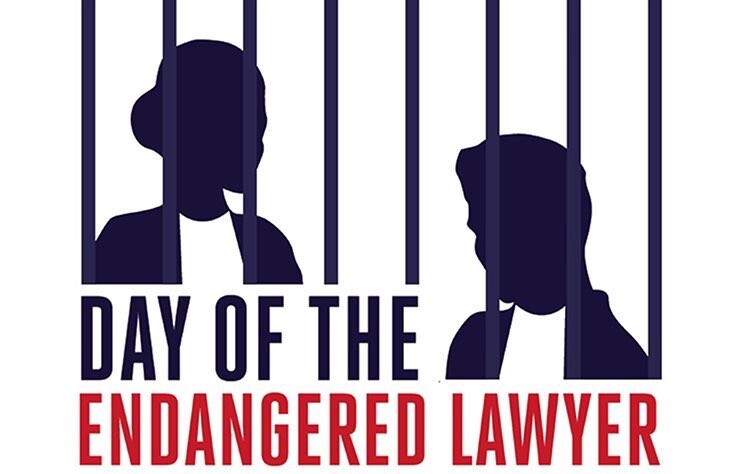
A consortium of international human rights organizations, bar associations, and advocacy groups has released its annual report coinciding with the International Day of the Endangered Lawyer, January 24. This year's focus is on Afghanistan. From the introduction of this year's report:

Since 2010, the International Day of the Endangered Lawyer has been observed on 24 January in cities, countries, and continents around the globe.

This date was chosen as the annual International Day of the Endangered Lawyer because on 24 January 1977, four lawyers and a co-worker were murdered at their address at Calle Atocha 55 in Madrid, an event that came to be known as the Massacre of Atocha.

Each year, the International Day is organised by the Coalition for the Endangered Lawyer, a network of national and international organisations and bar associations.

Professional and technical services vendors that develop custom software or technology to the specifications of their customers often face demands to indemnify and defend their customers from infringement claims of intellectual property rights. “If I’m sued because of your deliverable,” the customer's argument goes, “then you should step up and take responsibility for your failure to respect third party IP rights.”

This stance, though common, fails to appreciate the unique danger posed by “strict liability” IP rights for such vendors. These are IP rights that can be infringed regardless of whether the accused infringer knew of the existence of the protected subject matter, and regardless of any intention or knowledge. Utility patents, design patents, trademarks, trade dress, and, in the EU, design registrations, represent strict liability IP rights.

Consider the following not uncommon scenario: in the payments section of the contract you are negotiating, overdue interest is charged at five percent.  A higher rate is better for your client, and the client wants ten percent, so you redline accordingly. Client ultimately concedes and is willing to accept five. However, the draft from opposing counsel contains the following text:

Overdue interest is chargeable at the rate of five percent (10%).


The obligation to return or destroy confidential information upon request (or at contract termination) is ubiquitous in confidentiality agreements. But in this era of distributed network computing and cloud storage, when nothing can ever be completely deleted everywhere, compliance with such a clause is illusory.


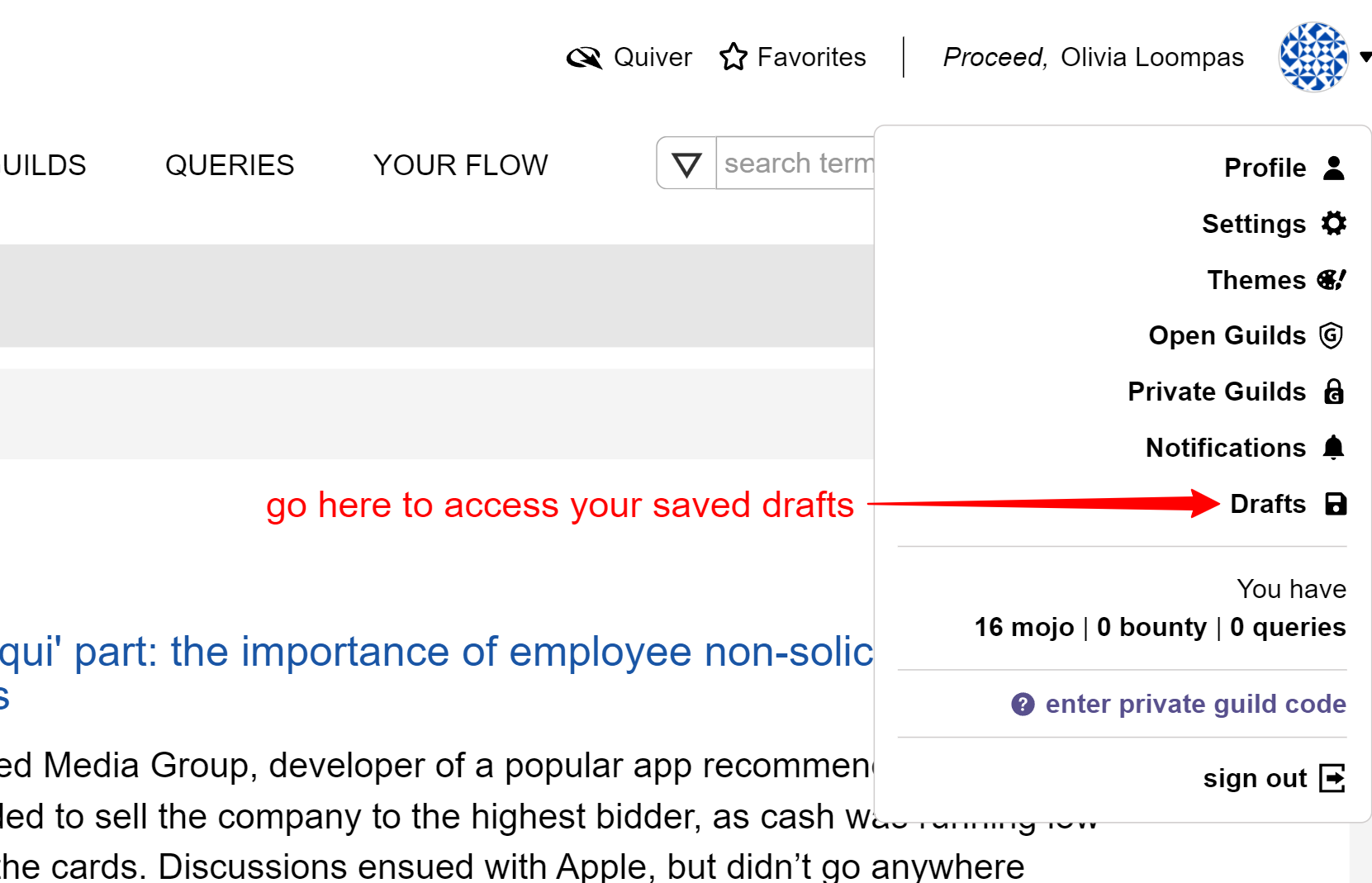
Consider the following scenario. Your startup client, a developer of a popular app recommendation engine, is running low on cash, and further investment is not in the cards. The shareholders decide it’s time to sell.

Excitement ensues as a massive personal technology lifestyle company takes an interest. After completion of due diligence, however, enthusiasm wanes. Soon the discussion focuses on a potential “acqui-hire,” meaning, a purchase of the company, not to exploit the company’s technology or market share, but simply to hire away the top engineering talent—with a commensurately lower valuation.

Too low for the shareholders, in fact, so they instruct you to terminate negotiations. The story doesn’t end there, however. The suitor turns around and hires away the startup’s top engineering and marketing talent.


Let’s say that you’re the deal lawyer representing a California company in contract negotiations with a New York company. Your client insists on designating California law as the operative body of law that governs the agreement and any related disputes, and on mandating that all disputes be resolved in a California state or federal court.

You negotiate hard for your client’s objective, but the other side is equally determined to designate New York law and New York courts. Your client lacks bargaining leverage to force the issue. Eventually, the other side carries the day on this battle, and your client is forced to accept the designation of New York law and courts in the contract.