
the Zealous


In representing tech suppliers, service providers and developers, we often come across “time is of the essence” clauses in customer contracts that purport to apply to some or all obligations of the agreement. An example is, “Time is of the essence with respect to Developer’s compliance with all deliverable milestones.”
 
It’s tempting to ignore such clauses, in favor of “picking your battles” and focusing on clauses of more obvious import like the liability caps. But that could be a mistake. The point of a “time is of the essence” clause is to allow the customer to claim a right of termination, or even rescission, of the agreement if the vendor is merely an hour late in delivery.


Professor Tanya J. Monestier, in a thought-provoking piece entitled, Damages for Breach of a Forum Selection Clause, 59 Am. Bus. J. (2020), quite ably goes through the incentives for those inclined to breach mandatory forum selection clauses, and how little some courts do to redress the harm caused by such breach. Protracting litigation, erecting hurdles and forum shopping are obvious motivators. "The goal," the professor writes, is "placing strategic obstacles in the way of one’s opponent right from the beginning. The non-breaching party may decide that the light is simply not worth the candle and proceed in the non-designated forum ...."


In binding arbitration clauses, exceptions to the duty to arbitrate for injunctive relief claims are common, especially in confidentiality and technology license agreements. The intention is to ensure that the parties are free to pursue claims for emergency relief in court, notwithstanding that all other claims must be resolved via arbitration.

All too many arbitration clauses, however, fail to articulate the injunctive relief bypass in a way that would allow the parties to actually bypass arbitration and proceed directly to court, given that rules of arbitration universally vest the arbitrator with the power to determine the scope of arbitrability as a threshold matter.


It's good to be reminded of how fortunate we are to be practicing law in a society that upholds the rule of law.

On 29 January 2017, U Ko Ni was shot dead as he waited for a taxi outside Yangon International Airport in Myanmar. A prominent constitutional lawyer, acclaimed reformer and senior legal adviser to Daw Aung San Suu Kyi’s National League for Democracy (‘NLD’), he was working on creative legal strategies to circumvent the constitutionally-enshrined political power still held by the Myanmar military. The murder of such a skilled legal activist who was deeply immersed in using legal strategies to embed the rule of law speaks directly to the dangers of lawyering in ‘hybrid’ regimes, those countries in which elements of authoritarianism and democracy commingle.


As deal lawyers, it’s our job to anticipate disputes. If a dispute does arise, the competence of both sides’ lawyers is immediately put to the test, in the form of a glaring spotlight on the choice of law and forum clause. Is the dispute captured cleanly, or ambiguously? Being forced to spend legal fees on the peripheral question of applicable law and forum is a recipe for massive client frustration.


At this time 27 years ago, OJ Simpson was acquitted in Los Angeles Superior Court of the murders of Nicole Brown Simpson and Ron Goldman. The jury deliberated for less than four hours. The government's case was doomed primarily by a single government witness, Mark Furhman.

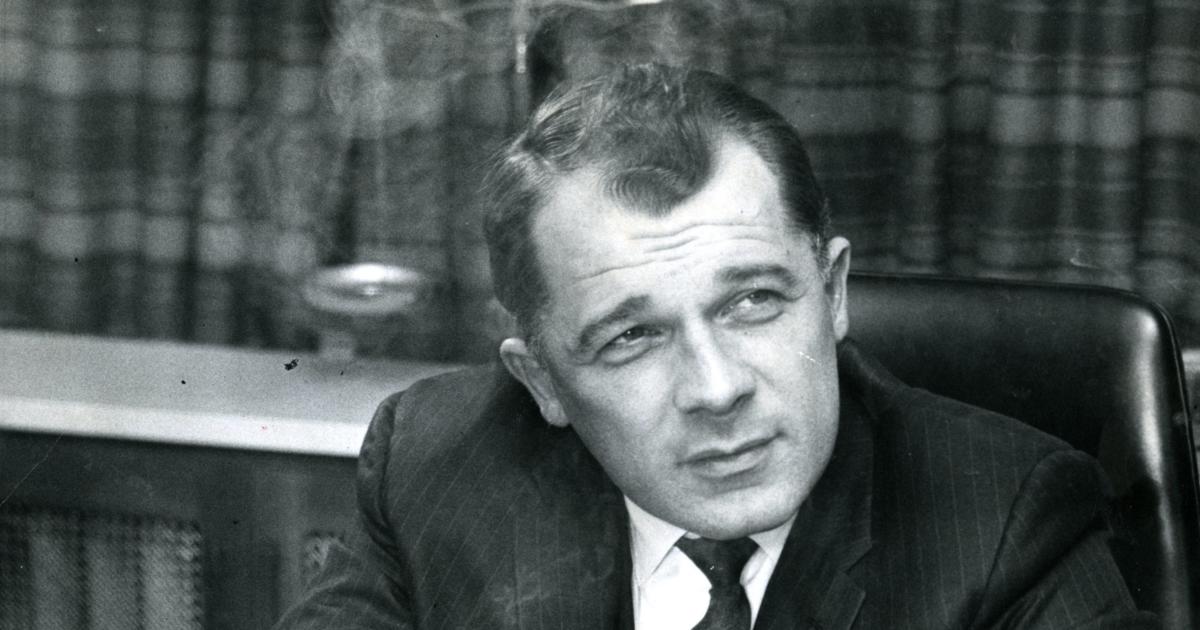
Simpson’s group of defense lawyers, which would come to be known as the “dream team,” included F. Lee Bailey (shown in photo). Bailey conducted the cross-examination of Furhman, a detective with the LAPD. It was Furhman who discovered a right-handed blood-covered glove at Simpson’s residence that matched a bloody glove found at the scene of the double-homicide. The blood from both gloves was identical, and DNA evidence from the left glove revealed a mix of Simpson’s blood and that of the two victims.

The theory of the defense was that Mark Fuhrman was a racist and had planted the glove at Simpson's residence in order to frame Simpson, or at least, to pump up the case against him. The actions and testimony of Furhman were more than enough to implant reasonable doubt in the minds of the jury members.

Consider the following all-too-common scenario: employee leaks valuable company information to a competitor and is fired. Company then sues the employee for breach of an employment NDA, which applies to “all proprietary information” that the employee received. The confidentiality obligation is evergreen--an all-too common feature of employee NDAs.

Outcome? In a state where employer-mandated non-compete covenants are enforceable if reasonable, a US court has struck down this exact NDA as an unreasonable restraint of trade.


In the early 20th century, the limited liability afforded by the corporate form was in its nascency. Lawyers consequently resorted to contract language to shield shareholders from liability for the corporation’s debts, using the so-called “no recourse against others” clause.

Today, most lawyers take corporate liability protection for granted, and probably assume that such a clause is unnecessary. Yet, trust in the supposed impenetrability of the corporate veil could be misplaced.


From Randy T. Austin, The Reasonable Man Did the Darndest Things, 1992 BYU L. Rev. 479 (1992):

Obviously the Reasonable Man spends most, if not all, of his time doing reasonable things. Indeed, the very essence of the Reasonable Man is his unparalleled propensity to act reasonably. Oddly, however, the Reasonable Man has been spotted doing some rather peculiar things, peculiar at least for the Reasonable Man. For example, the Reasonable Man has been observed disobeying the direct requests of a gunman at point blank range. He has been seen driving through puddles splashing muddy water on unsuspecting pedestrian, jumping out of a moving car, and even running people over occasionally. In addition, he has been known to flip-out periodically, some have even seen him leaving people to die although he could have saved them. One of his most famous acquaintances claims that the Reasonable Man gets out of his car at every railroad crossing to check for oncoming trains. One judge has even suggested that the Reasonable Man may even turn down box seats to watch a baseball game from the bleachers.


Among the nearly infinite variety of legal agreements in use today, the non-disclosure agreement for general bilateral business discussions is by far the most ubiquitous. If measured only by the frequency of its use and the significance of its impact, a company’s NDA template is arguably its most important. The $200 million verdict against Oculus for breach of a rather simple NDA speaks volumes as to how critical such an agreement can be.

Every company has its own unique general use NDA template; paradoxically, many companies sign the opposite party’s template more often than not. The party larger in size, reputation, market cap, or perceived importance usually wins the battle of the NDA form. This NDA ritual takes place hundreds of times a day all over the world.


When I was a young law firm associate back in the day, I was second chair on a complex, lucrative (for our client) and acrimonious technology/patent license negotiation. We were holed up in a conference room with buyer's counsel, in the dead of a typical brutal Colorado winter, groping our way towards final agreement. The legal negotiations were excruciating. We were the smaller party going up against a huge computer manufacturer, and the buyer's counsel, on the junior side of the experience scale, simply kept repeating the same mantra that corporate policy forbids any flexibility, even on what clearly should be uncontentious points.


An exposition on the use and abuse of dictionaries in recent US Supreme Court jurisprudence, by Mark A. Lemley, Chief Justice Webster, 106 Iowa L. Rev. 299 (2020):

The Supreme Court has a love affair with the dictionary. Half of its decisions in the 2018 Term cited a dictionary, often as the primary or exclusive means of defining a statutory term. The Court regularly upends decades of precedent and ignores congressional intent (and sometimes common sense) in favor of a chosen dictionary definition. The Solicitor General may long have been the “tenth Justice,” but in the twenty-first century the Chief Justice of the Supreme Court may as well be, not John Roberts, but Noah Webster.


Justice in the dark web is explained in this piece from Analyst1, Dark Web - Justice League (2021):

When it comes to the rule of law, access to justice for all and a fair trial are both fundamental in any democratic society. But what if the Dark Web community has its own justice system that believes in the same values?

Every day there are dozens of cases all over the Dark Web that escalate to this underground justice system and patiently wait for the high-ranking authorized cybercriminals (usually members of a forum administration) to solve the dispute and assign a winner and loser.


A cogent summary of the Veil of Ignorance, first articulated by John Rawls in A Theory of Justice (1971).

The Veil of Ignorance is a way of working out the basic institutions and structures of a just society. According to Rawls, working out what justice requires demands that we think as if we are building society from the ground up, in a way that everyone who is reasonable can accept. We therefore need to imagine ourselves in a situation before any particular society exists; Rawls calls this situation the Original Position. To be clear, Rawls does not think we can actually return to this original position, or even that it ever existed. It is a purely hypothetical idea: our job in thinking about justice is to imagine that we are designing a society from scratch. …

Of course, if we were designing a society in the Original Position, people might try to ensure that it works in their favour. The process is thus vulnerable to biases, disagreements, and the potential for majority groups ganging up on minority groups. Rawls’s solution to this problem comes in two parts. Firstly, he makes some assumptions about the people designing their own society. People in the Original Position are assumed to be free and equal, and to have certain motivations: they want to do well for themselves, but they are prepared to adhere to reasonable terms of cooperation, so long as others do too. …


r/lawyertalk post 29.06.22 by reddituser atyl1144:

Does anyone regret going to law school?

I think I made a bad choice. I was one of those "I didn't become a doctor like my mom wanted so I guess I'll go to law school" types. Young and naive and too status conscious. I made it into a top law school, took the CA bar once, failed and never tried again cuz I wasn't inspired. I'm sooo not a good fit for law. I like careers with flexibility, movement, team work, creativity, playfulness. I was playful and goofy in law school and people thought I was a weirdo. I have a really hard time sitting for hours reading and writing. I fit in better with actors, but of course I can't make a decent living in acting (I've done student films and community theater). So I'm poor with a law degree now.

comment 29.06.22 by codker92:

Being a lawyer is badass.