The Lawyers’ Ways
by Paul Laurence Dunbar (1872-1906)
I've been list'nin' to them lawyers
In the court house up the street,
An' I've come to the conclusion
That I'm most completely beat.
 Lawyer UP
lawyers with mojo
Lawyer UP
lawyers with mojo
The Lawyers’ Ways
by Paul Laurence Dunbar (1872-1906)
I've been list'nin' to them lawyers
In the court house up the street,
An' I've come to the conclusion
That I'm most completely beat.

Reflections on the billable hour, from Tim Harford in a piece entitled, The billable hour is a trap into which more and more of us are falling:
Twenty years ago, M Cathleen Kaveny, a professor of law and theology, began an article with the observation that “Many lawyers are very unhappy, particularly lawyers who work in big firms. They may be rich, and getting even richer, but they are also miserable, or so they say.” Was this sad state of affairs caused by long hours or stressful work? Perhaps.
But Kaveny identified a more specific culprit: the “billable hour” — or even more precisely, the billable six-minute increment. By accounting for every moment of their working lives, and defining each moment as either “billable” or, regrettably, “non-billable”, lawyers were being tugged inexorably towards an unhappy, unhealthy attitude to the way they spent their time. ….

The current redlining paradigm in use with most word processing solutions today needs improvement. It's consuming far too much of our time, and fails to express our intentions efficiently and accurately. There's a better way.

Around this time last year, Disney, owner of the Star Wars franchise, announced via Twitter that we should all celebrate May 4th as “Star Wars Day” by tweeting our favorite Star Wars memories using #maythe4th — with tweets powered by Disney Legal (emphasis added):
Celebrate the Saga! Reply with your favorite #StarWars memory and you may see it somewhere special on #MayThe4th.
By sharing your message with us using #MayThe4th, you agree to our use of the message and your account name in all media and our terms of use here: http://disneytermsofuse.com.

A surprising number of agreements negotiated by the most sophisticated counsel in the transactional bar contain ambiguous terms simply because the use of such terms is considered market. ....
This is not necessarily because deal lawyers do not understand that they are doing this: many times deal dynamics simply do not permit the correction of these ambiguities. But there are other less appealing theories explaining the "herd" mentality of many within the transactional bar, as well as the resulting tendency of many transactional lawyers to become document processors rather than contract draftpersons.

In the nineties, Saturday Night Live ran a series of skits centered around an unfrozen caveman lawyer, played by Phil Hartman. This was a typical episode:
Announcer:
One hundred thousand years ago, a caveman was out hunting on the frozen wastes when he slipped and fell into a crevasse. In 1988, he was discovered by some scientists and thawed out.
He then went to law school and became … Unfrozen Caveman Lawyer.
Jingle:
He used to be a caveman,
but now he's a lawyer.
Unfrozen Caveman Lawyer!

From the Wordpress.com Terms of Service, section 14, near the end:
Our Services are provided “as is.” Automattic and its suppliers and licensors hereby disclaim all warranties of any kind, express or implied, including, without limitation, the warranties of merchantability, fitness for a particular purpose and non-infringement. Neither Automattic, nor its suppliers and licensors, makes any warranty that our Services will be error free or that access thereto will be continuous or uninterrupted. If you’re reading this, here's a treat. You understand that you download from, or otherwise obtain content or services through, our Services at your own discretion and risk.

Redline is powerful knowledge management. Private guilds enable solos and institutions alike to develop libraries of go-to clauses and forms—and their redlined variations derived from experience and collaboration.
Watch the new Redline Films production (88 seconds) to learn more.

In his book, Authentic Happiness (Free Press, 2002), Dr. Seligman reviewed his research on whether any personality attributes were consistently correlated to success in any of 104 careers he studied. Interestingly enough, the only career he found consistent correlations for was lawyering. And the attribute? Pessimism. Pessimism was so highly correlated with success in lawyers that the higher the pessimism in law students, the higher their grades.

I can't keep up with what's been going down
I think my heart must just be slowing down
Among the human beings
In their designer jeans
Am I the only one who hears the screams
And the strangled cries of lawyers in love

80 years ago this month, the US District Court for China was abolished by Congress, after being in existence since 1906. Established by virtue of treaties between the US and China and by various acts of Congress, the court had civil and criminal jurisdiction over US citizens living in China and, later, in the Philippines, Guam and other US "possessions." Appeals went to the Ninth Circuit US Court of Appeals in San Francisco.

There aren't many songs in which lawyers are portrayed in a positive light. At best, lawyers are mentioned in order to depict someone in dire straits and desperate for legal help (see Warren Zevon's Lawyers, Guns & Money). At worst, lawyers are scapegoats for all of society's ills (see Tom Paxton, One Million Lawyers).
The song My Attorney Bernie, by Dave Frishberg, is an exception. One of the better renditions of this song is here, by Blossom Dearie.
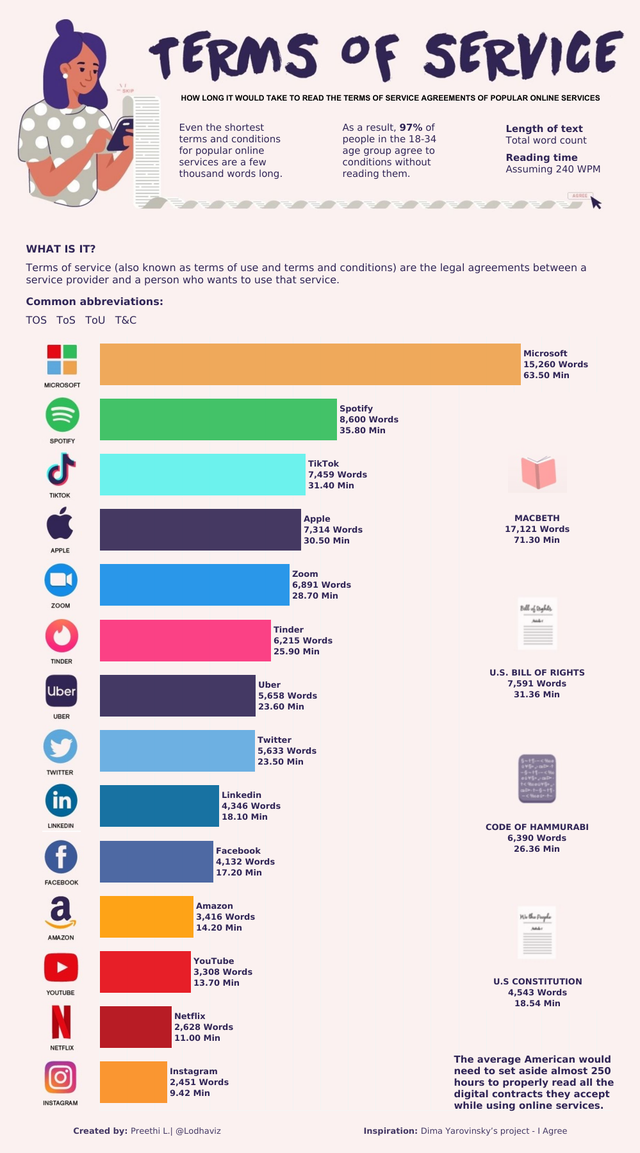
University researchers conducted a study of 543 participants (communication majors studying privacy, big data and surveillance issues) to measure the frequency and depth of online terms review and comprehension. The research was motivated by a desire to point out the fallacy of a privacy regulatory regime that relies exclusively on the notice-and-consent model.
The study authors used modified versions of LinkedIn's terms and policies. They asked the students to sign up to a fictitious social network, similar to LinkedIn, that the university, the students were told, had contracted with. The terms required the user to consent to over-the-top terms, including the disclosure of data to the NSA and to "third parties [building] data products designed to assess eligibility", which, the terms state, "could impact … employment, financial service (bank loans, insurance, etc.), university entrance, international travel, and the criminal justice system."

Abro Industries, out of Indiana, makes and sells products under the “Made in the USA” label. Abro sells products like duct tape and epoxy glue, and does quite well in emerging economies. Abro’s Tim Demarias scours the world seeking to open new markets. At one point, Tim noticed that sales were down considerably, and suspected counterfeiters. In an NPR broadcast entitled “The Stolen Company”, Tim recounts his adventures in chasing down one particularly ruthless counterfeiter out of China. Here’s the transcript of the broadcast:

While lawyers score well above the national average (115-130) in IQ, they score below the national average in emotional intelligence, as measured by the Mayer Salovey Caruso Emotional Intelligence Test. Their lowest sub-score in this four-part assessment is in the first branch—accurately perceiving their own and others emotions, while their highest subscore is the third branch, understanding emotions, a more cognitive ability. Unfortunately, this means that while lawyers are able to competently reason about emotions and their implications, the emotional data that they are analyzing day in and day out is likely to be incomplete or inaccurate—lawyers are likely to be misreading what they themselves or others are feeling. The result is that lawyers are more likely than non-lawyers to be caught off guard by a disgruntled client, an overwhelmed associate or an angry partner, or even by their own powerful reactions.

Introducing Redline (Live)
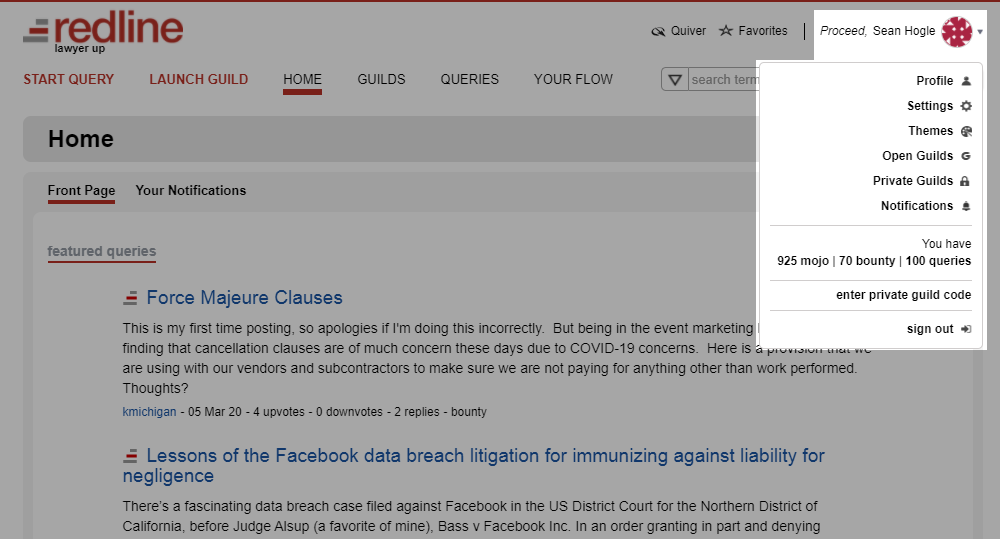
Convenient access
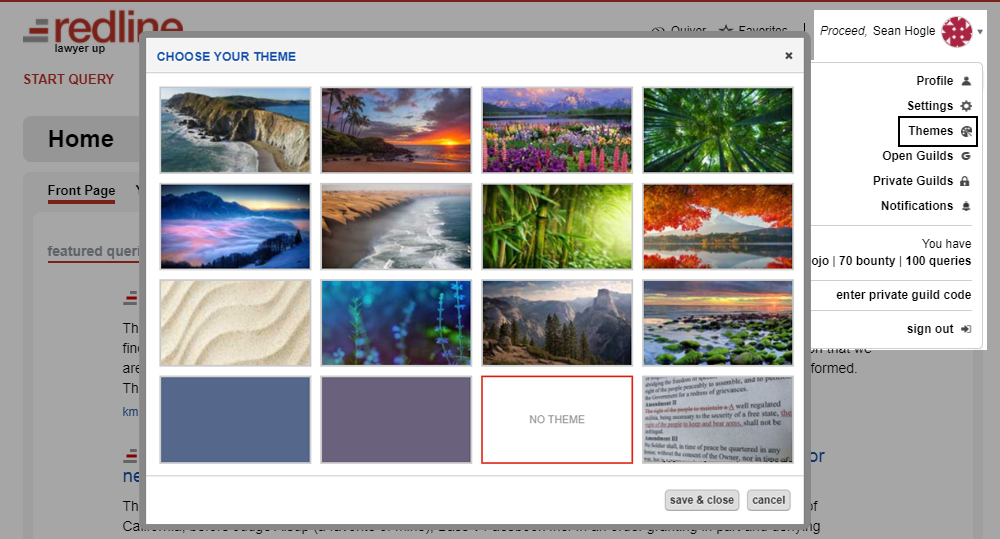
Redline in tranquility
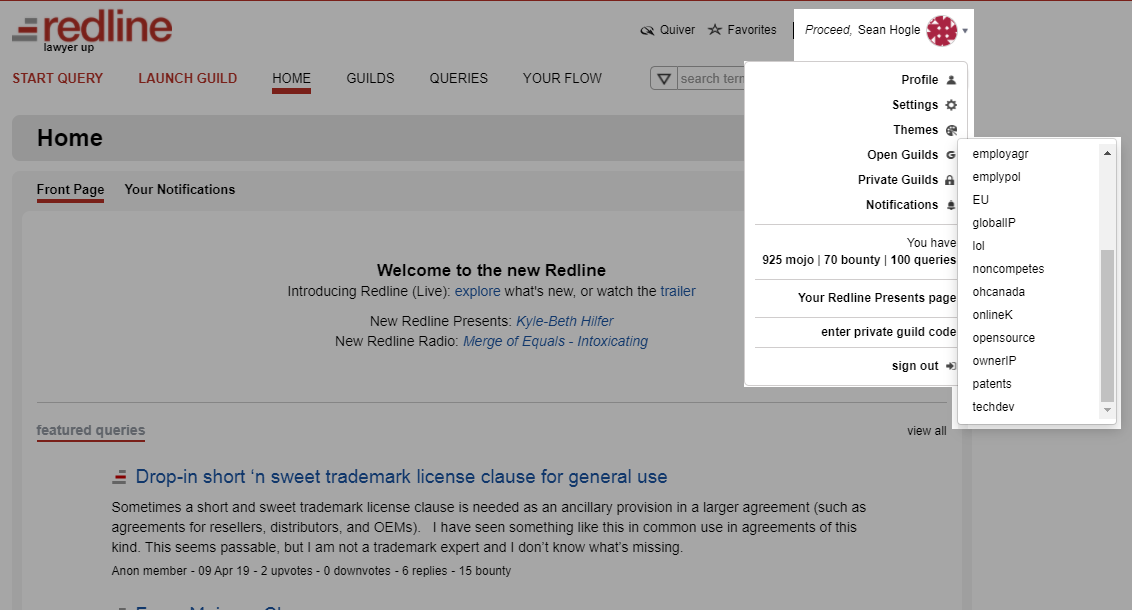
Quick access to your favorites
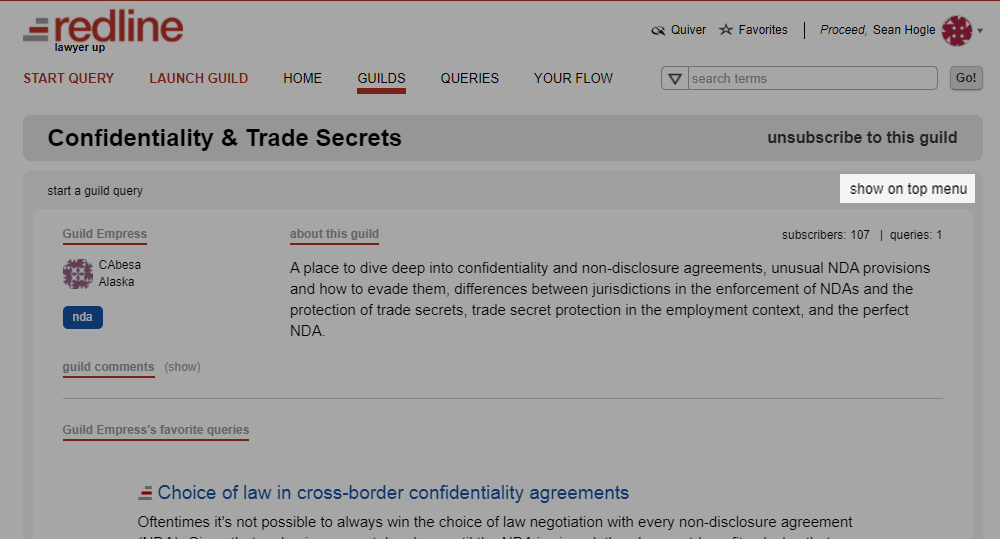
Add your fav guilds to the top menu shortcut
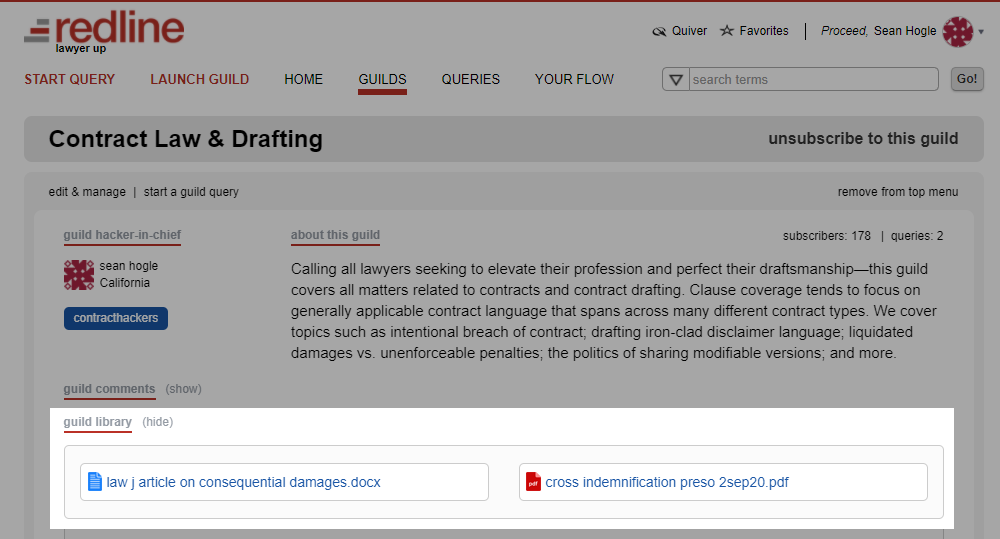
Store documents in guilds

Enter the access code to join the club
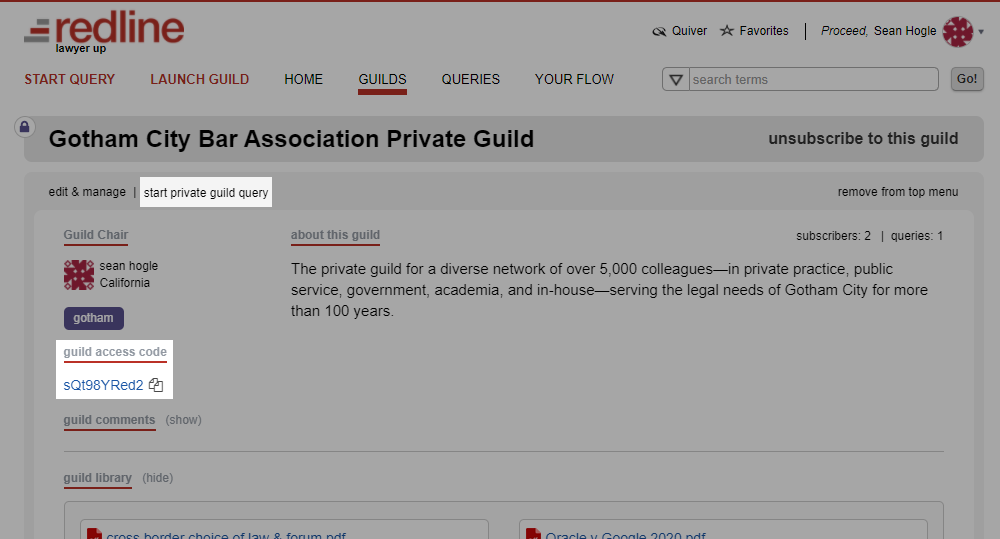
Redline amongst your select selves
Introducing Redline (Live)
Convenient access
Redline in tranquility
Quick access to your favorites
Add your fav guilds to the top menu shortcut
Store documents in guilds
Enter the access code to join the club
Redline amongst your select selves