
In US: must be an attorney licensed and in good standing in any state, territory or DC.
Outside US: must be a lawyer or equivalent (eg counselor, barrister, advocate, solicitor), duly educated and licensed/accredited and in good standing.
As a general rule, experienced and currently practicing lawyers, and those teaching law in the legal academy, are more likely to be admitted.
the Zealous

A few years ago, the ABA presented a panel discussion, When Good Lawyers Make Bad Decisions, moderated by Serina Vash, a former prosecutor in the US Attorney's Office in New Jersey.
The panelists consisted of an acting FBI agent and three formerly-licensed lawyers, all of whom pled guilty to felonies. Each of these ex-lawyers had not only impeccable pedigrees (Princeton, Columbia, Univ. VA/London School of Economics), but were highly successful in their respective law practices—at least, up until the time the troubles for each of them began.
And their troubles began, tragically, as the consequence of enormous pressures in their personal lives. The discussion was mesmerizing. Each lawyer patiently and in great detail recounted his or her slow descent into ethical lapses and, eventually, criminality.
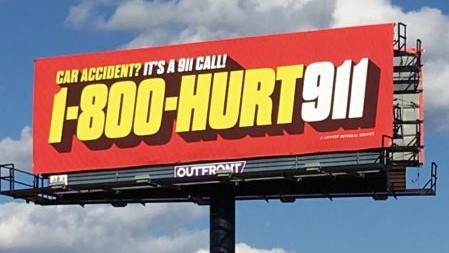
A cruise down any major interstate highway in the US will expose the driver to countless lawyer billboard ads. It’s a good bet that lawyers are among the most prolific billboard advertisers in the country.
In fact, the ads have reached the point where those most exposed to them—long-haul truckers—are taking action in opposition: Truckers fight back against ‘big truck wreck’ attorney billboards.
Most ads are cheesy and unremarkable. However, a few stand out:
Just because you did it doesn’t mean you’re guilty
Injured? Don’t pull your hair out. Mybaldlawyer.com
DUI/DWI Defense: 1-800-NOT-DRUNK
Don’t hire a lawyer from just billboards or TV!
Trust me! I’m a lawyer, my dogs do (accompanying photo of lawyer with his two beagles)
Call me. I’m a lawyer. I’m on a billboard.

In the TV series Goliath (Amazon Prime), Billy Bob Thornton plays Billy McBride, a badass but disgraced trial lawyer excommunicated from the massive firm that he founded. The show is about how Billy plots his attempt at redemption and revenge.
There's a scene in which Billy is prepping a deponent, his own witness, and conveys his five rules for depositions:

From David Lat, Law2020, The Ethical Implications of Artificial Intelligence:
Just as lawyers can over-delegate work to subordinates, they can also under-delegate, causing them to serve their clients less efficiently. In the context of artificial intelligence, one can imagine underutilization of AI – for example, a lawyer not using AI even though it could help that lawyer serve the client better.
In fact, given some of the psychological attributes commonly associated with lawyers – a focus on detail, a desire for control, an aversion to risk – the greater danger might very well be underutilization of, rather than overreliance upon, artificial intelligence.
In the majority of US states, a lawyer's duty of competence includes an obligation to be up on the latest technologies.

The President then asked, "What about these notes? Why do you take notes? Lawyers don't take notes. I never had a lawyer take notes."
McGahn responded that he keeps notes because he is a "real lawyer" and explained that notes create a record and are not a bad thing.
The President said, "I've had a lot of great lawyers, like Roy Cohn. He did not take notes."
- Mueller Report, vol. 11, p. 117.

The reason there’s so much Latin in the law is that the present-day legal systems of the US, UK, Canada, Australia, and much of Europe are ultimately direct or indirect heirs to the Roman legal system, and to the attendant language and terminology imposed on its subjects during Rome’s conquest.
Over 1500 years have passed since the fall of the Roman Empire, and yet here we are as a profession, continuing to use terminology like sui generis, habeas corpus and mutatis mutandis. (A brief and fascinating explication of this can be found here.)
This is generally understood among us. But what’s with all the French in the law of the common law countries? Force majeure or voir dire, anyone? Even today, the hail that court clerks in the US and England call when the judge enters the courtroom is French in origin: oyez (citation).
Redline has emerged from beta and is now live, with private guilds, an enhanced member experience, and more. Watch the trailer Lawyers with Mojo or click here to learn more.

It is the rare lawyer that takes a keen interest in a topic to the point of research and publication. Even rarer is the lawyer who courts criticism and reaction. By teaching, and accepting challenge, such a lawyer becomes an arena lawyer, willing to put herself out there.
The arena lawyer becomes an expert, and in doing so, adds to the collective knowledge of our trade.
And experts—even lawyers—are experts first, and competitors second. Law firms large and small go to great lengths to source original content, as a means of demonstrating expertise. This expertise can be easily appropriated by the competition, and yet the freely shared legal content flow never ceases.

On the origins of "Esquire" (or "Esq.") as an honorific for lawyers:
The word itself derives from Old French, and in turn from Latin, where it means something like “shield-holder.” In the 1200s and 1300s in England, a variety of languages were used, so such figures might be referred to as the … French escuier, which became “esquire.” These terms all refer to roughly similar people. This role was generally considered moderately prestigious for young men of some wealth, but at its core it was a service job. You carry a knight’s stuff, tend to his horses, that kind of thing. “Esquire” and “squire” were names for the same gig for a few hundred years.

Richard Susskind is “an author, speaker, and independent adviser to major professional firms and to national governments. His main area of expertise is the future of professional service and, in particular, the way in which the IT and the Internet are changing the work of lawyers.” In the words of Jordan Furlong: “We talk a lot about ‘visionaries’ these days, but in the legal profession, nobody seriously competes with Richard Susskind for that title ….”.
In 2009, Susskind published The End of Lawyers? Rethinking the Nature of Legal Services, a pioneering work that served as a wake-up call for the legal profession. Lawyers are not “entitled to profit from the law”, Susskind wrote. Susskind’s was one of the first voices to challenge lawyers to “identify their distinctive skills and talents, the capabilities that they possess that cannot, crudely, be replaced by advanced systems ....” Above all, lawyers should not “feel exempt from assessing whether at least some of their current workload might be undertaken differently in years to come. And no lawyers should shirk from the challenge of identifying their distinctive capabilities.”
Robert Holland.
Many lawyers, especially litigators, perceive qualities such as empathy, authenticity, and collaborative spirit that are essential for success in relationships and in most other professions to be liabilities in the practice of law. These lawyers may feel compelled to leave those qualities outside the office rather than harnessing the enormous positive energy that those qualities can provide to fuel their work. It’s no wonder that so many lawyers have low psychic energy and feel disconnected from their authentic selves in doing their jobs.
From an article in the ABA Journal, August 1929 issue:
Of course the economic situation of the bar would be considerably improved if the number of lawyers could be reduced. There are too many lawyers today for the amount of legal business everywhere in America; and the normal result of excess of supply as compared to demand, has kept fees of lawyers low and elaborate living by lawyers rare.
M&A lawyers: we are not above criticism.
M&A has been characterized as a bloodsport. In a strategic transaction, the stakes are high for all concerned: careers, reputations, and business and financial fortunes and are on the line. In addition to the high stakes, the one-off relationship between a typical

In Lawyers as Upholders of Human Dignity, Georgetown Law Professor and legal ethics guru David Luban explains how advancing and maintaining human dignity is a fundamental cornerstone of our profession. Indeed, it is “what makes the practice of law worthwhile.” Defining dignity as a “property of relationships between humans," Prof. Luban articulates how the right to legal representation in criminal cases neatly encapsulates the notion of the law as a defender of human dignity.
Previous
Next

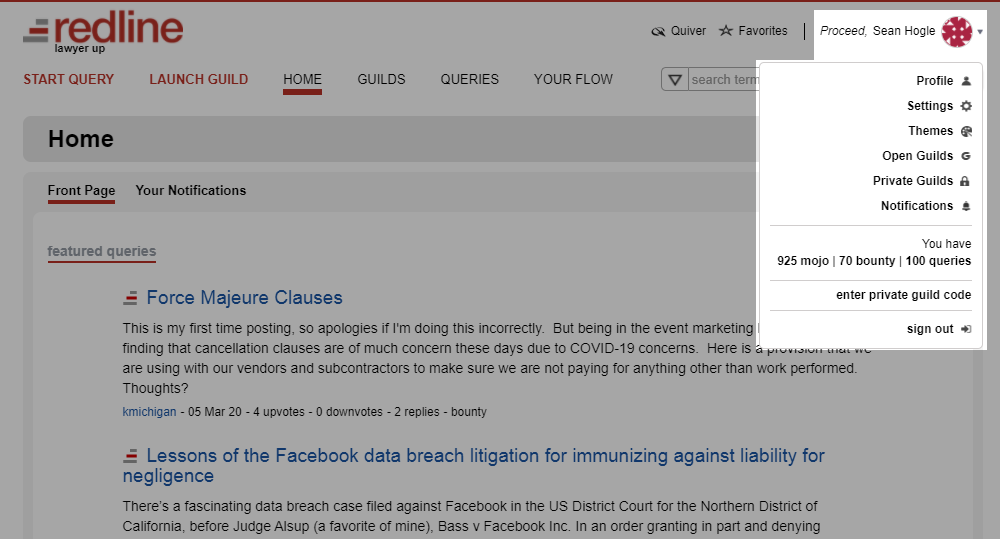


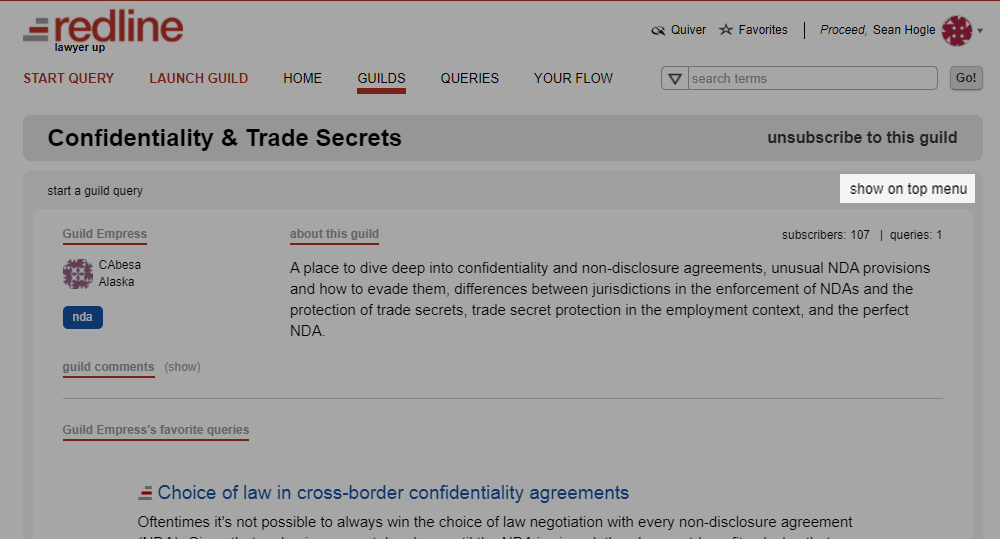

Welcome to the new Redline
Introducing Redline (Live)
Proceed Counselor
Convenient access
Theme Your Space
Redline in tranquility
Go to Your Guilds
Quick access to your favorites
Guild Page Shortcut
Add your fav guilds to the top menu shortcut
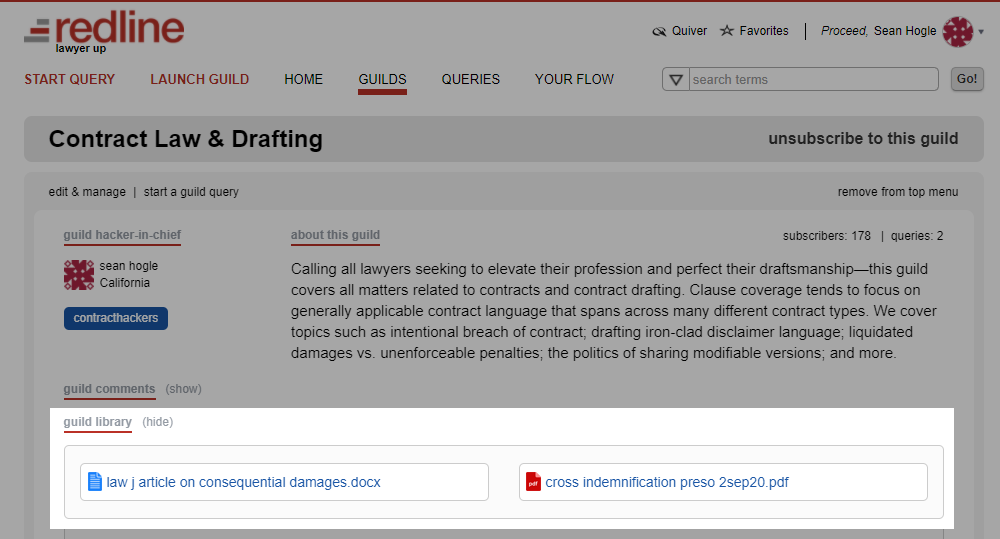
Guild Libraries
Store documents in guilds
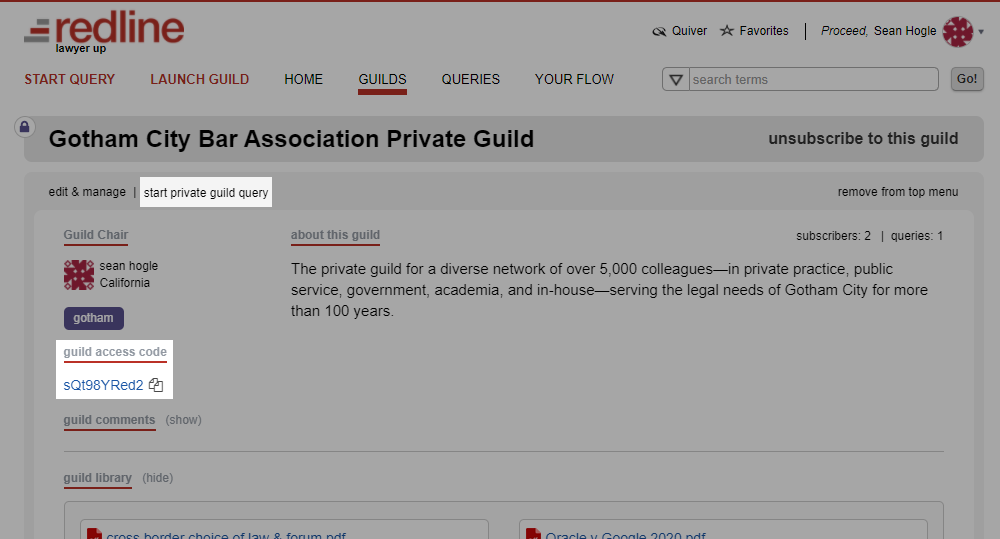
Private Guilds
Enter the access code to join the club
Private Guilds
Redline amongst your select selves