
the Zealous

24 Feb 23


Nearly all NDAs and confidentiality provisions exclude from the confidentiality and restricted use obligations information that is or becomes “public,” “publicly available,” or “publicly known.”

Contract drafting guru Ken Adams has given his imprimatur to the “is or becomes public” formulation. His preferred version of this exclusion is any information that is “already public when the Disclosing Party discloses it to the Recipient or becomes public (other than as a result of breach of this agreement by the Recipient) after the Disclosing Party discloses it to the Recipient.”

But is the “public” characterization the appropriate standard when it comes to the protection of trade secrets?

13 Feb 23

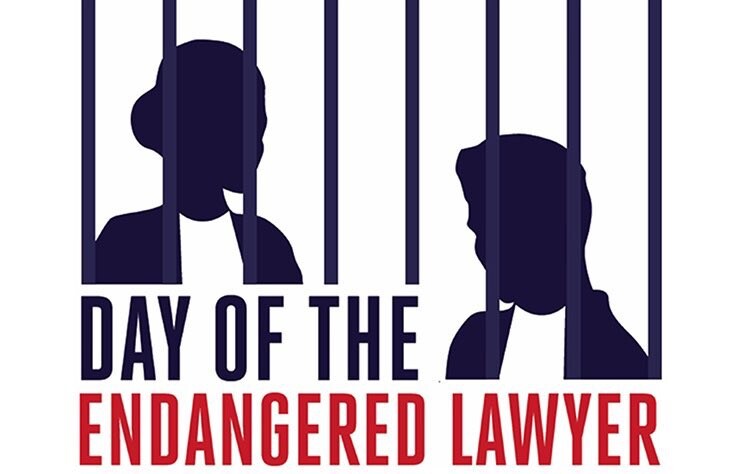
A consortium of international human rights organizations, bar associations, and advocacy groups has released its annual report coinciding with the International Day of the Endangered Lawyer, January 24. This year's focus is on Afghanistan. From the introduction of this year's report:

Since 2010, the International Day of the Endangered Lawyer has been observed on 24 January in cities, countries, and continents around the globe.

This date was chosen as the annual International Day of the Endangered Lawyer because on 24 January 1977, four lawyers and a co-worker were murdered at their address at Calle Atocha 55 in Madrid, an event that came to be known as the Massacre of Atocha.

Each year, the International Day is organised by the Coalition for the Endangered Lawyer, a network of national and international organisations and bar associations.
13 Dec 22

Professional and technical services vendors that develop custom software or technology to the specifications of their customers often face demands to indemnify and defend their customers from infringement claims of intellectual property rights. “If I’m sued because of your deliverable,” the customer's argument goes, “then you should step up and take responsibility for your failure to respect third party IP rights.”

This stance, though common, fails to appreciate the unique danger posed by “strict liability” IP rights for such vendors. These are IP rights that can be infringed regardless of whether the accused infringer knew of the existence of the protected subject matter, and regardless of any intention or knowledge. Utility patents, design patents, trademarks, trade dress, and, in the EU, design registrations, represent strict liability IP rights.

06 Dec 22

Consider the following not uncommon scenario: in the payments section of the contract you are negotiating, overdue interest is charged at five percent.  A higher rate is better for your client, and the client wants ten percent, so you redline accordingly. Client ultimately concedes and is willing to accept five. However, the draft from opposing counsel contains the following text:

Overdue interest is chargeable at the rate of five percent (10%).

19 Nov 22


The obligation to return or destroy confidential information upon request (or at contract termination) is ubiquitous in confidentiality agreements. But in this era of distributed network computing and cloud storage, when nothing can ever be completely deleted everywhere, compliance with such a clause is illusory.

10 Nov 22


Consider the following scenario. Your startup client, a developer of a popular app recommendation engine, is running low on cash, and further investment is not in the cards. The shareholders decide it’s time to sell.

Excitement ensues as a massive personal technology lifestyle company takes an interest. After completion of due diligence, however, enthusiasm wanes. Soon the discussion focuses on a potential “acqui-hire,” meaning, a purchase of the company, not to exploit the company’s technology or market share, but simply to hire away the top engineering talent—with a commensurately lower valuation.

Too low for the shareholders, in fact, so they instruct you to terminate negotiations. The story doesn’t end there, however. The suitor turns around and hires away the startup’s top engineering and marketing talent.

31 Oct 22


Let’s say that you’re the deal lawyer representing a California company in contract negotiations with a New York company. Your client insists on designating California law as the operative body of law that governs the agreement and any related disputes, and on mandating that all disputes be resolved in a California state or federal court.

You negotiate hard for your client’s objective, but the other side is equally determined to designate New York law and New York courts. Your client lacks bargaining leverage to force the issue. Eventually, the other side carries the day on this battle, and your client is forced to accept the designation of New York law and courts in the contract.

25 Oct 22


In representing tech suppliers, service providers and developers, we often come across “time is of the essence” clauses in customer contracts that purport to apply to some or all obligations of the agreement. An example is, “Time is of the essence with respect to Developer’s compliance with all deliverable milestones.”
 
It’s tempting to ignore such clauses, in favor of “picking your battles” and focusing on clauses of more obvious import like the liability caps. But that could be a mistake. The point of a “time is of the essence” clause is to allow the customer to claim a right of termination, or even rescission, of the agreement if the vendor is merely an hour late in delivery.

19 Oct 22


Professor Tanya J. Monestier, in a thought-provoking piece entitled, Damages for Breach of a Forum Selection Clause, 59 Am. Bus. J. (2020), quite ably goes through the incentives for those inclined to breach mandatory forum selection clauses, and how little some courts do to redress the harm caused by such breach. Protracting litigation, erecting hurdles and forum shopping are obvious motivators. "The goal," the professor writes, is "placing strategic obstacles in the way of one’s opponent right from the beginning. The non-breaching party may decide that the light is simply not worth the candle and proceed in the non-designated forum ...."

15 Oct 22


In binding arbitration clauses, exceptions to the duty to arbitrate for injunctive relief claims are common, especially in confidentiality and technology license agreements. The intention is to ensure that the parties are free to pursue claims for emergency relief in court, notwithstanding that all other claims must be resolved via arbitration.

All too many arbitration clauses, however, fail to articulate the injunctive relief bypass in a way that would allow the parties to actually bypass arbitration and proceed directly to court, given that rules of arbitration universally vest the arbitrator with the power to determine the scope of arbitrability as a threshold matter.

12 Oct 22


It's good to be reminded of how fortunate we are to be practicing law in a society that upholds the rule of law.

On 29 January 2017, U Ko Ni was shot dead as he waited for a taxi outside Yangon International Airport in Myanmar. A prominent constitutional lawyer, acclaimed reformer and senior legal adviser to Daw Aung San Suu Kyi’s National League for Democracy (‘NLD’), he was working on creative legal strategies to circumvent the constitutionally-enshrined political power still held by the Myanmar military. The murder of such a skilled legal activist who was deeply immersed in using legal strategies to embed the rule of law speaks directly to the dangers of lawyering in ‘hybrid’ regimes, those countries in which elements of authoritarianism and democracy commingle.

04 Oct 22


As deal lawyers, it’s our job to anticipate disputes. If a dispute does arise, the competence of both sides’ lawyers is immediately put to the test, in the form of a glaring spotlight on the choice of law and forum clause. Is the dispute captured cleanly, or ambiguously? Being forced to spend legal fees on the peripheral question of applicable law and forum is a recipe for massive client frustration.

30 Sep 22


At this time 27 years ago, OJ Simpson was acquitted in Los Angeles Superior Court of the murders of Nicole Brown Simpson and Ron Goldman. The jury deliberated for less than four hours. The government's case was doomed primarily by a single government witness, Mark Furhman.

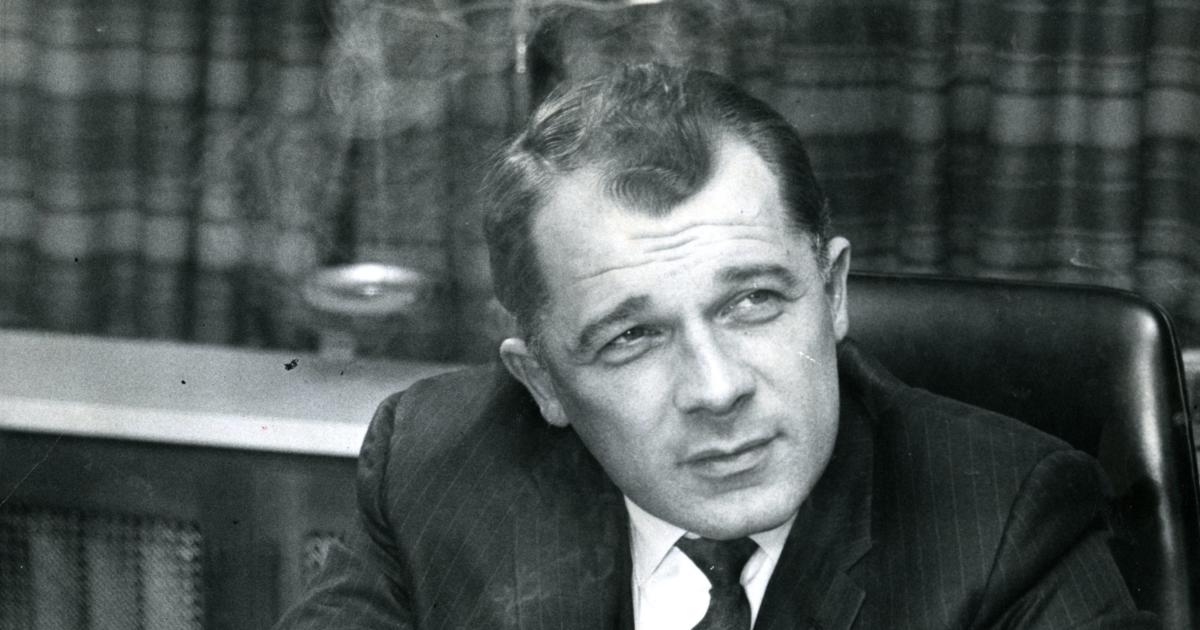
Simpson’s group of defense lawyers, which would come to be known as the “dream team,” included F. Lee Bailey (shown in photo). Bailey conducted the cross-examination of Furhman, a detective with the LAPD. It was Furhman who discovered a right-handed blood-covered glove at Simpson’s residence that matched a bloody glove found at the scene of the double-homicide. The blood from both gloves was identical, and DNA evidence from the left glove revealed a mix of Simpson’s blood and that of the two victims.

The theory of the defense was that Mark Fuhrman was a racist and had planted the glove at Simpson's residence in order to frame Simpson, or at least, to pump up the case against him. The actions and testimony of Furhman were more than enough to implant reasonable doubt in the minds of the jury members.

27 Sep 22

Consider the following all-too-common scenario: employee leaks valuable company information to a competitor and is fired. Company then sues the employee for breach of an employment NDA, which applies to “all proprietary information” that the employee received. The confidentiality obligation is evergreen--an all-too common feature of employee NDAs.

Outcome? In a state where employer-mandated non-compete covenants are enforceable if reasonable, a US court has struck down this exact NDA as an unreasonable restraint of trade.

17 Sep 22


In the early 20th century, the limited liability afforded by the corporate form was in its nascency. Lawyers consequently resorted to contract language to shield shareholders from liability for the corporation’s debts, using the so-called “no recourse against others” clause.

Today, most lawyers take corporate liability protection for granted, and probably assume that such a clause is unnecessary. Yet, trust in the supposed impenetrability of the corporate veil could be misplaced.